
How to Write a Flawless Lab Report for University Science Classes
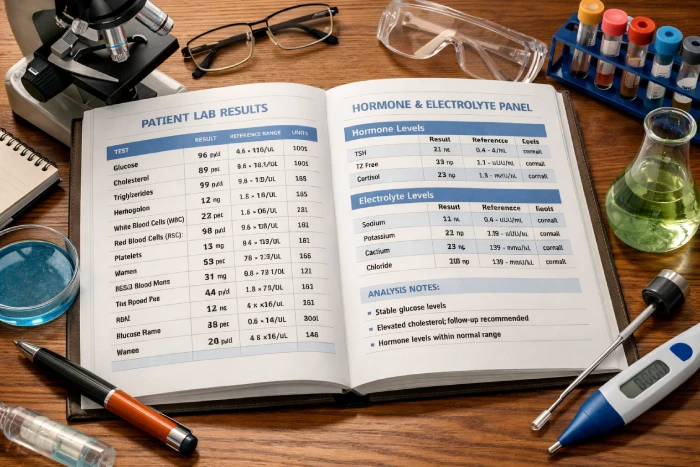
To become a STEM major, you have to be a student in disciplines such as biology, chemistry or physics, among others. However, you must keep in mind that being a STEM student takes hard work and many hours of study. Many students love practical subjects where they get a chance to do experiments in the laboratory, because these activities are both useful and enjoyable.
On the other hand, the process of preparing a report on such activities becomes tiresome. That is precisely the reason why knowing how to write a lab report is crucial for any university student.
First and foremost, writing a report in an organised manner helps you save valuable time. At the same time, it helps you present your work in a professional way. Secondly, adhering to a certain format and completing all the necessary sections increases your chances of getting high grades.
The Standard Lab Report Format (What Professors Expect)
In science, writing is more than merely presenting your findings; it is about providing evidence of your results in an easy and repeatable manner. Scientific professionals adhere to a particular lab report format so that other researchers can comprehend, analyse, and replicate the experiment. This process is called reproducibility.
It is very important in scientific studies. Professors require students to follow this structure due to its ability to foster discipline and clarity in reasoning. A properly structured report offers ease of verification of methodology and results. You can read further on formatting a scientific lab report guide for better comprehension.
Step-by-Step Outline of a Lab Report
It is necessary to be aware of the sections of writing a science report because each one serves a unique purpose. Following the proper order of writing and focusing on clarity helps you create a highly understandable and professional-looking paper. The following sections make up the majority of the lab reports written in universities.
Title Page & Abstract
The first part of your document, especially while writing a science report, the title page, should be clear and well-formatted. Include all the necessary elements, such as the title of your research, your name, class code, instructor’s name, and the submission date.
Abstract is one of the most crucial parts as it summarises everything discussed in your report. Usually, it is about 150 words long, covering the purpose of the research, your approach to completing the experiment, significant findings, and conclusions. The first thing you need to remember about abstracts is that they should be written at the end, after the completion of the whole paper. Thus, you know the information for sure.
Introduction
In the introduction to your experiment, it is necessary to provide some information concerning the theory on which it was conducted and refer to some studies devoted to this issue before. Mentioning other people’s investigations shows that your work is based on already existing theories and not merely on speculations. At the same time, it is essential to formulate the hypothesis of your study and indicate it.
Materials and Methods
This part provides detailed information regarding the actual conduct of the experiment. All materials and equipment used should be included in the description, along with an exact step-by-step process. One important guideline for a biology lab report structure is the use of the passive past tense. In other words, one should not say “I observed the reaction” but “The reaction was observed.”
Results (Data & Figures)
As mentioned above, you should only display the results of your experiment without discussing them. That is, only data obtained from experiments needs to be shown in the results section through the use of graphs, tables, and diagrams.
The best university lab report example shows that results should be represented using figures with all titles included, in addition to proper naming of axes along with their units.
Do not give any opinion about the results in this part. For proper presentation, follow APA formatting rules for tables and figures to ensure your visuals look professional and academically correct.
Discussion
Here is where you interpret your findings. You describe what the results mean and whether they confirm or refute your hypothesis. Should your results contradict your hypothesis, you need to explain why it might be the case.
You can also point out any flaws or potential errors in your experimental procedures that could influence your results. In this section, you demonstrate your analytical skills and your ability to make connections between your results and the theoretical framework outlined in your introduction.
Conclusion & References
The conclusion summarises the main findings of the experiment in a clear and short way. It restates whether the hypothesis was supported and highlights the key outcomes of the study without adding new information.
After the conclusion, you must include references using proper citation styles such as APA or CSE, depending on your course requirements. Proper referencing is an important part of how to write a lab report because it shows academic honesty and gives credit to original scientific sources used in your research.
Top 3 Reasons Students Lose Marks on Lab Reports
Students fail to get good scores not due to errors in their experiments but from simple mistakes in writing. A common one is the confusion between the results section and the discussion section.
In the results section, only facts should be included, whereas in the discussion, explanations are provided. This mistake lowers the quality of your report. Clear separation of sections also shows a strong understanding of scientific reporting standards and improves overall readability for the examiner.
Another major mistake among students is plagiarism from the lab manual. It may cause serious damage to your academic performance. Always write in your own words to show your understanding. Remember, tables and charts should be written in the appropriate way to avoid losing scores. Follow proper lab report format and give the right labels, titles, and units in your table.
Frequently Asked Questions (FAQs)
How long should a lab report be?
A lab report is usually between 5 and 10 pages, depending on the experiment and course level. Simple labs may require shorter reports, while complex experiments need more detailed explanations, data, and analysis. Always follow your professor’s instructions, as length and depth can vary based on university requirements and subject expectations.
Can I use “I” or “We” in a lab report?
No, you should not use “I” or “we” in a lab report. Academic writing requires a formal tone, so you must use the third-person passive voice. For example, write “The solution was heated” instead of “I heated the solution.” This keeps the report objective, professional, and focused on the experiment.
Get Expert Science Assignment Help Today (CTA)
Is your data a mess? Don’t have time to format 20 APA citations or organise complex results? Writing a perfect lab report is overwhelming, especially with tight deadlines and multiple assignments. Let Scholarsplanet.ca’s STEM experts write your report. Our writers understand university standards. They can help you structure your report, fix formatting issues, and improve clarity.
Save your time, reduce stress, and submit a polished lab report that meets all academic expectations with confidence. If you want better grades, faster submission, and improved academic writing skills overall. This is where professional science assignment help can support you.